.png?width=100&height=104&name=Frame%204%20(1).png "Frame 4 (1)")
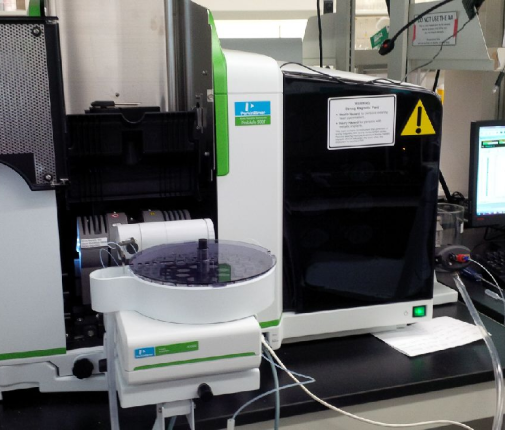
Not every elemental analysis problem needs ICP-MS
Beyond “Use ICP-MS for Everything”
Elemental impurity testing in pharmaceuticals has changed dramatically over the past decade. The industry has moved away from the old, nonspecific “heavy metals” test and toward a more scientific, element-specific, risk-based framework under ICH Q3D and USP <232>/<233>. This shift has encouraged much broader use of ICP-OES and ICP-MS for testing drug products, APIs, excipients, raw materials, and other pharmaceutical materials.
That transition has been important and necessary. ICP-MS, in particular, is a powerful tool for trace and ultra-trace elemental analysis. But the rise of ICP-MS should not lead laboratories to assume that every elemental analysis problem must be solved with the most sensitive instrument available.
Atomic absorption spectroscopy, including flame AAS and graphite furnace AAS, still has a practical place in pharmaceutical quality control. ICP-OES also remains highly useful for many multi-element applications. The best analytical choice depends not on which instrument is newest, but on the intended use of the method, the elements of concern, the matrix being tested, the required reporting limits, and the regulatory or compendial purpose of the analysis.
Risk-Based Testing Changed the Question
ICH Q3D introduced a risk-based approach to elemental impurities. It does not require every element to be tested in every material under all circumstances. Instead, it asks manufacturers to understand the product, its components, the manufacturing process, the route of administration, the maximum daily dose, and possible sources of elemental impurities.
Those sources may include catalysts, raw materials, excipients, manufacturing equipment, utilities, and container closure systems. Once the risk is understood, appropriate controls and analytical methods can be selected.
This is a key point: elemental impurity compliance is not simply a matter of buying an ICP-MS and running samples. The real work is in defining the analytical problem, preparing the sample correctly, demonstrating recovery, controlling contamination, evaluating interferences, and validating the method for its intended use.
Pharmaceutical materials are highly varied. Tablets, capsules, creams, suspensions, gels, powders, mineral-based excipients, botanicals, colorants, inorganic salts, polymers, and packaging materials can all present different analytical challenges. A method that works well for one matrix may perform poorly for another.
Where Flame AAS Still Fits
Flame atomic absorption spectroscopy is one of the most established techniques for elemental analysis. It is simple, familiar, cost-effective, and well understood. For many single-element assays, especially where the element is present at ppm or higher levels, flame AAS can still be entirely appropriate.
Examples may include assays or limit tests for elements such as zinc, magnesium, calcium, sodium, potassium, iron, copper, and nickel, depending on the matrix and specification.
In these cases, ICP-MS may offer better sensitivity, but better sensitivity does not automatically produce a better quality decision. If the specification is easily measured by flame AAS, and the method is accurate, precise, linear, and suitable for the sample matrix, then flame AAS remains a sound choice.
This is especially relevant for compendial methods, legacy specifications, product registrations, quality agreements, and established internal control strategies. Replacing a validated AAS method with ICP-OES or ICP-MS may be possible, but it is not simply an instrument swap. It may require validation, comparability work, change control, and potentially regulatory or customer approval
The Role of Graphite Furnace AAS
Graphite furnace AAS, including transversely heated graphite furnace AAS, sits between flame AAS and plasma-based techniques. It provides much greater sensitivity than flame AAS while remaining a targeted, element-specific method.
In graphite furnace AAS, a small volume of sample is introduced into a graphite tube and taken through a controlled temperature program that includes drying, pyrolysis, atomization, and cleanout. Transversely heated furnace designs improve temperature uniformity and support more controlled atomization conditions.
For pharmaceutical laboratories, graphite furnace AAS can be valuable when only one or a few elements need to be measured at low levels. It may be useful for elements such as lead, cadmium, arsenic, chromium, nickel, selenium, cobalt, or thallium, depending on the required limit and sample matrix.
However, graphite furnace AAS is not a replacement for ICP-MS when broad, multi-element screening is required. It is slower, more element-specific, and more dependent on matrix-specific optimization. Its strength is targeted low-level analysis where the analyte list is narrow and the method can be properly developed and validated
ICP-OES Should Not Be Overlooked
ICP-OES, also known as ICP-AES, remains one of the most practical elemental analysis tools in pharmaceutical laboratories. It provides multi-element capability, good linear dynamic range, relatively good matrix tolerance, and high sample throughput.
ICP-OES is often well suited for oral dosage forms, excipients, raw materials, inorganic salts, catalysts, mineral-containing materials, and samples where the target elements are present at moderate levels.
It is a mistake to dismiss ICP-OES simply because ICP-MS can achieve lower detection limits. The relevant question is not whether ICP-MS can go lower. The relevant question is whether ICP-OES can meet the required reporting limits with acceptable accuracy, precision, specificity, and robustness.
When properly configured, optimized, and validated, ICP-OES can be an excellent fit for many pharmaceutical elemental impurity applications.
ICP-MS Is Powerful, But Not Automatic
ICP-MS is the most sensitive of the common elemental analysis techniques discussed here. It offers low detection limits, broad multi-element capability, isotope information, and trace to ultra-trace measurement capability.
It is often the preferred technique for ICH Q3D elemental impurity testing, especially where low permitted daily exposures, low specification limits, high daily doses, or parenteral and inhalation routes require very low reporting limits.
ICP-MS is especially useful for elements such as arsenic, cadmium, lead, mercury, cobalt, vanadium, nickel, and platinum group elements. It is also highly valuable when a broad elemental screen is needed to support a risk assessment.
But ICP-MS has its own challenges. It is sensitive not only to analytes, but also to contamination. Reagents, labware, digestion vessels, sample handling, the laboratory environment, and instrument memory effects can all influence the result. Matrix suppression, internal standard drift, polyatomic interferences, isobaric interferences, and collision or reaction cell conditions must also be understood and controlled.
In other words, ICP-MS is powerful, but it is not a shortcut around method development and validation.
Sample Preparation Often Determines Success
For elemental analysis, sample preparation is often the most important part of the method. This is true whether the final measurement is made by AAS, graphite furnace AAS, ICP-OES, or ICP-MS.
Some pharmaceutical samples dissolve easily. Others require acid digestion, microwave digestion, extraction, dilution, or a highly matrix-specific preparation. Some materials may not fully digest under routine conditions. Certain elements may be lost, converted to volatile species, precipitated, adsorbed, or affected by the acid system used.
This means method suitability cannot be assumed. It must be demonstrated.
Fit-for-Purpose Method Selection
A practical approach begins with a clear analytical question. Is the purpose to support an ICH Q3D risk assessment? To comply with USP <232>/<233>? To perform a monograph assay? To test a raw material, excipient, API, finished dosage form, cleaning residue, or packaging component?
The next questions are equally important. Is the element list broad or narrow? What reporting limits are required? What is the daily dose? What is the route of administration? What is known about the manufacturing process and the matrix?
Once those questions are answered, the technique can be selected more rationally.
Flame AAS is appropriate when the element list is short, concentrations are moderate, and the method is established or compendial. Graphite furnace AAS is appropriate when one or a few elements must be measured at low levels. ICP-OES is appropriate when multi-element capability is needed and the required limits are achievable. ICP-MS is appropriate when very low reporting limits, broad screening, or ultra-trace analysis is required.
These technologies are not mutually exclusive. In many laboratories, they are complementary.
The Bottom Line
Elemental impurity testing has clearly entered a more scientifically sound, risk-based era. ICP-OES and ICP-MS are central to that framework, and ICP-MS is indispensable for many low-level elemental impurity applications.
But AAS has not become obsolete. Flame AAS remains suitable for many targeted assays. Graphite furnace AAS remains useful for selected low-level determinations. ICP-OES remains a practical and powerful multi-element technique. ICP-MS remains the tool of choice for many trace and ultra-trace applications.
The best approach is not to force every sample onto one instrument. The best approach is to understand the product, the matrix, the elements of concern, the regulatory requirement, and the required method performance.
In pharmaceutical quality control, the central requirement has not changed: the method must be suitable for its intended use
Click Here to Donwload our Expert Insights Whitepaper on the subject